If you're marketing an event lighting company, posting more photos isn't necessarily the answer. You need a system that helps the right people find you, understand your value, trust your work, contact you, and ultimately book you.
That means looking beyond social media and building a connected marketing journey — from Google search and venue relationships to your website, inquiries, quotes, and follow-up.
Here's how to build that system.
The Short Answer
A strong event lighting marketing system connects seven stages:
Get your free visibility audit →
Visibility → Visit → Inquiry → Response → Quote → Follow-up → Booking
You need to be discoverable when someone searches for lighting. Your website and portfolio need to make your work easy to understand. Your relationships with venues and event professionals need to create additional opportunities. And once someone contacts you, your response, quote, and follow-up need to keep that opportunity moving.
The biggest mistake is treating each activity separately. More traffic won't fix a website that doesn't convert. More inquiries won't fix poor follow-up. More followers won't automatically produce more bookings.
The goal isn't more marketing activity. It's a better-connected marketing system.
The LitBooked Booking Pipeline
Think about your marketing as a pipeline:
- Visibility — The right prospect discovers your business through Google, social media, a venue, planner, referral, or another channel.
- Visit — They look at your website, Google Business Profile, portfolio, or social content.
- Inquiry — They decide your company is worth contacting.
- Response — You turn that initial interest into a real conversation.
- Quote — You present a clear solution for their event.
- Follow-up — You help the opportunity move toward a decision.
- Booking — The marketing and sales process produces a booked event.
This framework gives you a better question than "How do we get more leads?"
"At which stage are good opportunities disappearing?"
That is where your next marketing improvement should begin.
1. Start With Your Existing Bookings
Before investing more time in a marketing channel, look at where your current business actually comes from.
Where Your Bookings Come From
Take your last 20–30 bookings and record the source:
- Google search
- Venue referral
- Planner
- Referral
- Repeat client
- Paid advertising
- Other
What the Patterns Tell You
Then look for patterns.
If your best bookings consistently come through venues, building stronger venue relationships may deserve more attention.
If Google generates inquiries but very few become bookings, the problem may be your website, response process, quote, or follow-up — not your visibility.
If Instagram gets attention but almost no qualified inquiries, increasing your posting frequency may not solve the underlying problem.
Diagnose the pipeline before trying to fill it.
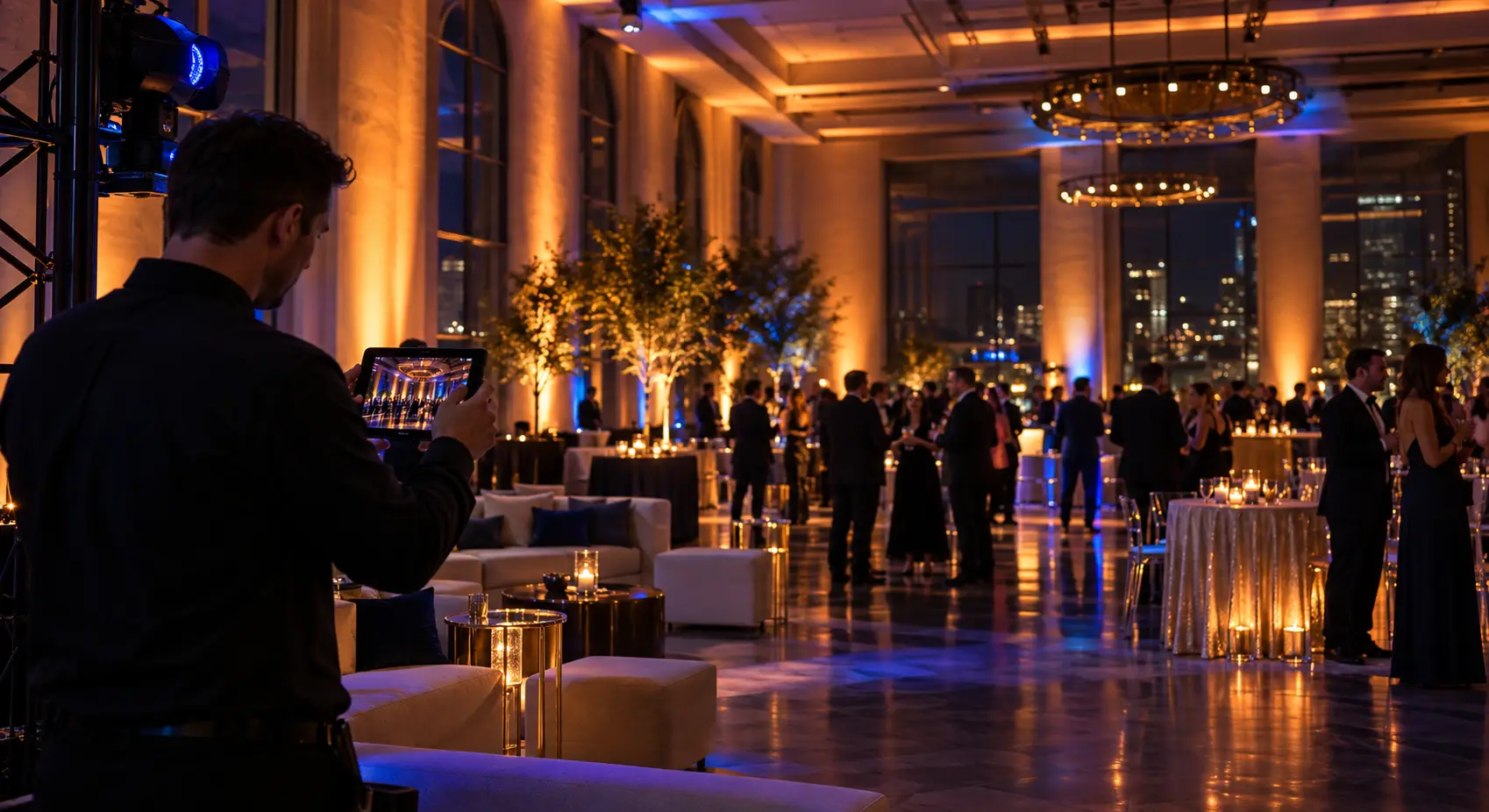
2. Become Easier to Find Locally
When someone searches for an event lighting company, wedding lighting company, uplighting, or another relevant service in your market, your business needs to be easy to discover and easy to evaluate.
Your Google Business Profile
Start with your local search presence.
Your Google Business Profile should clearly communicate:
- What you do
- Where you operate
- What types of events you serve
- Your website and contact information
- Relevant project photography
- Genuine customer reviews
Your Website
Your website should reinforce that same message. Don't make visitors figure out whether you actually serve their event or location.
Instead of:
"Professional lighting solutions for every occasion."
Be specific about your services, markets, and event types.
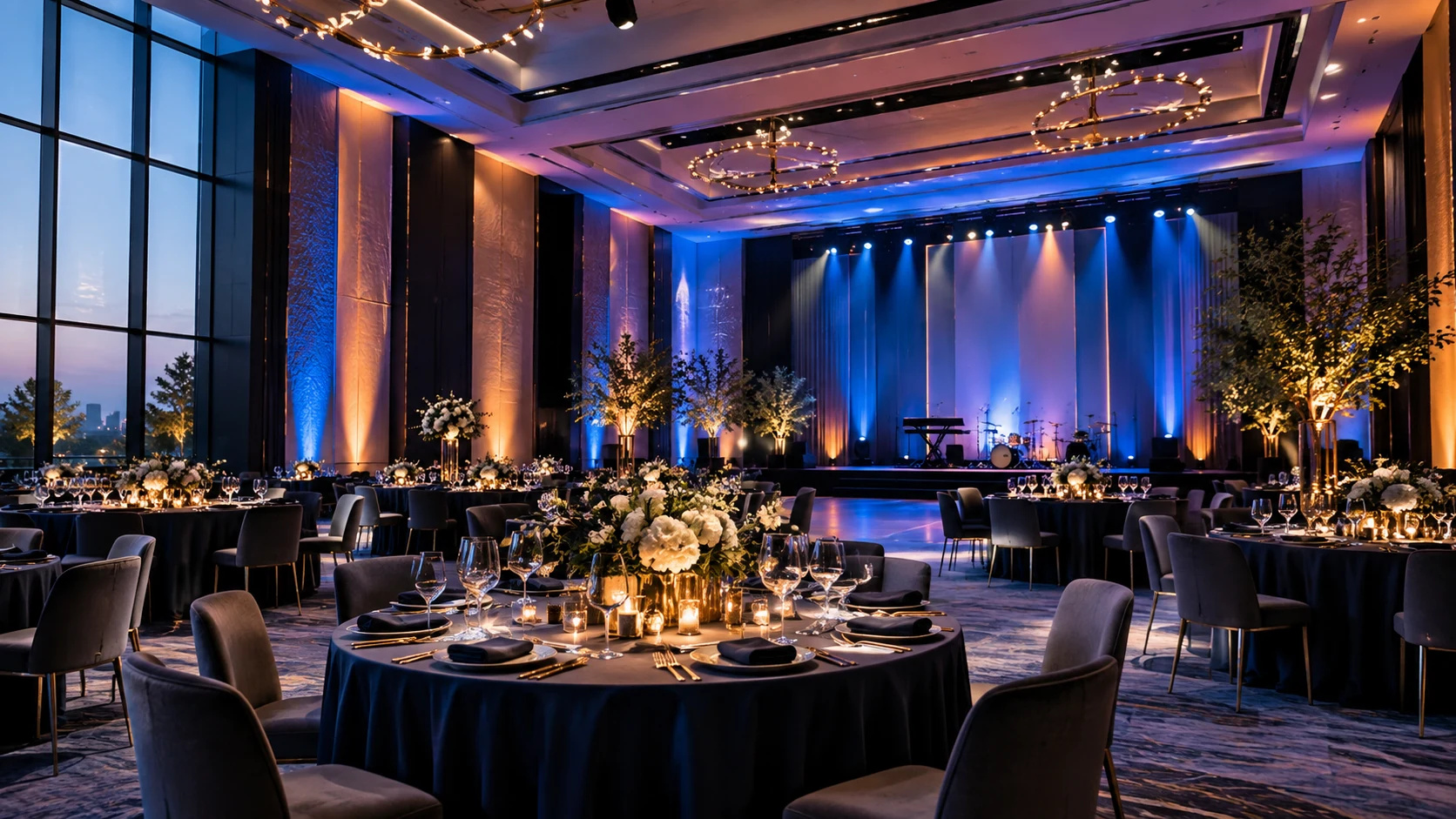
And when you show your work, focus on the transformation, not just the equipment. A client isn't really buying "20 uplights." They're buying the atmosphere those lights create.

3. Build a Venue and Planner Pipeline
Event lighting companies operate inside an ecosystem of venues, planners, DJs, AV companies, photographers, producers, and other event professionals. Those relationships can become an important source of qualified opportunities.
But a generic message like:
"Hi, we provide event lighting. Please keep us in mind."
doesn't give someone much reason to remember you.
A Better Process
Use a better process:
Find → Research → Create Value → Build Relationship → Prove → Become Memorable
Research Before You Reach Out
For example, research a venue and create three lighting concepts specifically for its space:
- Elegant — architectural uplighting and controlled ambient illumination.
- Romantic — warm perimeter lighting and focused table illumination.
- Celebration — dynamic lighting designed around the dance floor and event energy.
Now you're not simply telling the venue that you sell lighting. You're demonstrating that you understand its space and can think about how lighting can improve an event there. That's a much stronger conversation.
4. Make Your Website Remove Doubt
Your website has an important job: make the prospect confident enough to take the next step.
What a Visitor Needs to Understand Quickly
A visitor should quickly understand:
- What services you provide
- What events you work on
- Where you operate
- What your work looks like
- Why they should trust you
- How your process works
- What they should do next
Your Portfolio Needs Context, Not Just Photos
Your portfolio should go beyond a collection of beautiful photographs. Give each strong project some context:
Event → Space → Challenge → Lighting Approach → Result
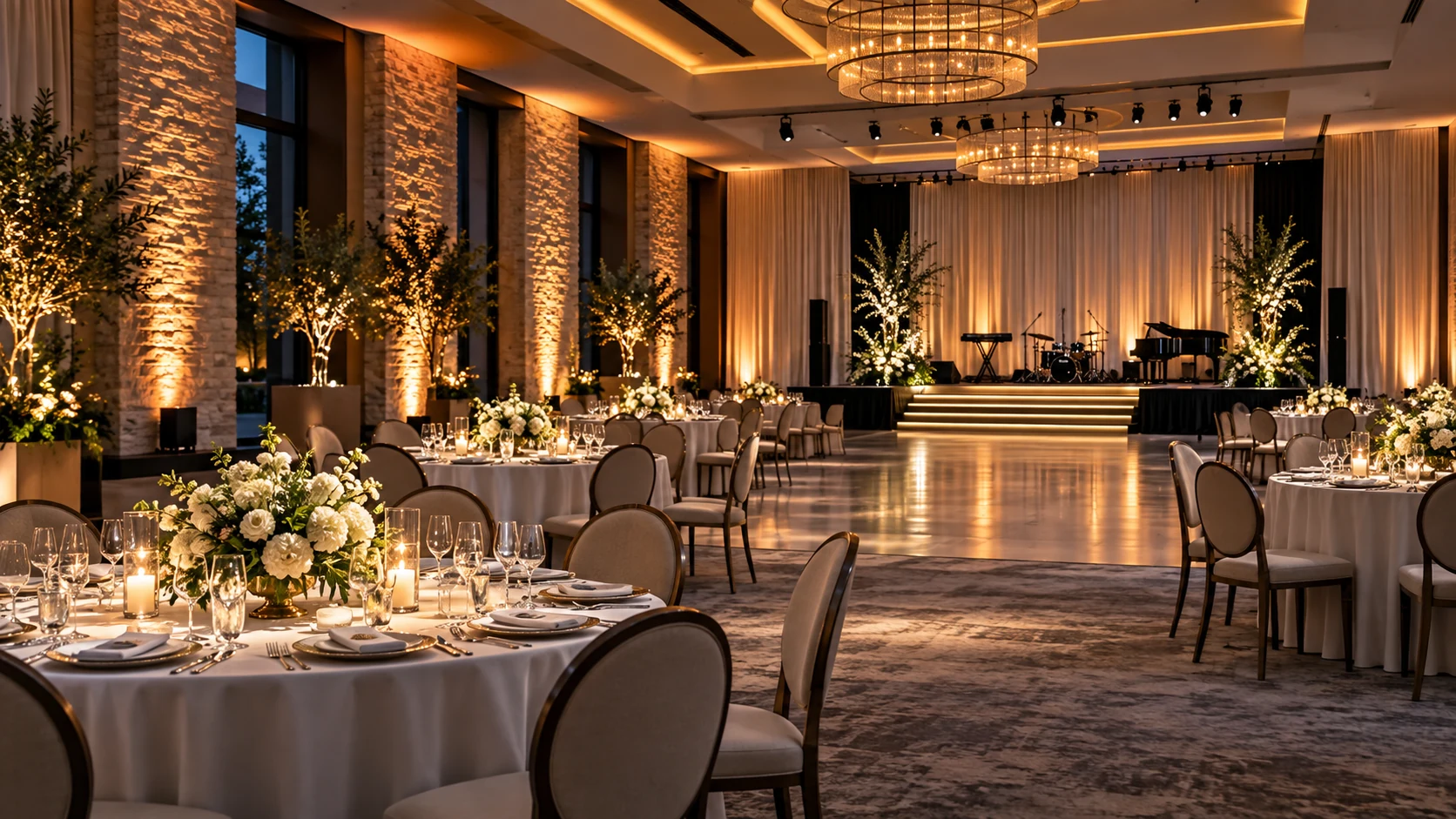
For example: a wedding reception had a large open room that felt visually flat after sunset. The lighting approach used warm perimeter illumination and focused areas of light to create a more intentional atmosphere while keeping the dance floor visually distinct.
Now the prospect sees more than the finished photograph. They see how you think.
That's important because your portfolio should prove that you can solve lighting problems — not simply that you own lighting equipment.
5. Turn Social Media Into Proof
Social media is valuable for lighting companies because the work is naturally visual. But don't make follower count the entire objective.
Five Content Categories
Build content around five categories:
- Transformation — show what changed before and after lighting.
- Education — explain why a particular lighting decision works.
- Proof — show completed events, projects, reviews, and venues.
- Expertise — explain how you approach real lighting challenges.
- Process — show planning, setup, testing, and execution.
Turning One Event Into Multiple Posts
One event can become multiple pieces of content. A single wedding could produce a transformation post, educational video, behind-the-scenes content, venue-specific idea, and detailed website portfolio.
That creates a useful loop:
Social → Website → Proof → Inquiry
Your social media attracts attention. Your website provides depth. Your portfolio builds confidence. Your inquiry process converts interest into opportunity.
Free calculator
Lead value calculator
See what your enquiries are worth today, and what a small lift in conversion adds over a year.
The last figure shows how much more you would book each year if your conversion rate rose by two percentage points.
6. Your Response, Quote, and Follow-Up Are Marketing
Marketing doesn't stop when someone fills out your inquiry form. Your response is part of the experience your marketing created.
Your Response
A strong response should acknowledge the inquiry, demonstrate that you understand the event, and make the next step clear.
Your Quote
Your quote should also do more than display a price. It should explain:
- What is being provided
- Why the recommendation fits the event
- What the lighting is designed to accomplish
- What is included
- What happens next
Your Follow-Up
Then comes follow-up. Instead of repeatedly sending:
"Just checking in."
give the prospect something useful. You might clarify an option, answer a common question, explain a recommendation, or show an example relevant to their event.
Good follow-up helps someone make a decision.
What Most Event Lighting Companies Get Wrong
- Marketing equipment instead of outcomes. Clients care about what the lighting does for their event — not simply the fixture names.
- Measuring followers instead of opportunities. Audience size doesn't tell you whether the right prospects are moving toward a booking.
- Showing generic portfolios. A beautiful photograph is stronger when the visitor understands the event, challenge, approach, and result.
- Ignoring venue relationships. The people already involved in planning events can be valuable sources of qualified opportunities.
- Making every page sound identical. A wedding client, corporate event producer, venue manager, and private-event client may have very different concerns.
- Stopping after the quote. A quote is not necessarily the end of the marketing journey.
What Probably Won't Work
"We just need to post more." More content doesn't automatically solve a conversion problem.
"We need more followers first." A smaller audience of relevant prospects can be more valuable than a large audience with little buying intent.
"Let's fix everything at once." Trying to improve every channel simultaneously makes it difficult to identify what actually changed.
A stronger approach is:
Find the bottleneck → Fix it → Measure it → Improve the next stage.
Find Your Marketing Bottleneck
Use this simple diagnostic:
- You're difficult to find → Look at local search and visibility.
- People visit but don't inquire → Look at your website, proof, messaging, CTA.
- Inquiries arrive but don't progress → Look at response and qualification.
- Quotes go out but few bookings follow → Look at offer, presentation, trust, follow-up.
- Bookings are inconsistent → Look at lead sources, referrals, pipeline.
This prevents you from solving the wrong problem.
A Practical 30-Day Starting Plan
Week 1 — Discoverability. Review your Google Business Profile, website, local relevance, service pages, and contact path.
Week 2 — Proof. Improve your strongest project pages, portfolio descriptions, reviews, transformation examples, and trust signals.
Week 3 — Relationships. Identify relevant venues and event professionals. Research them and begin personalized relationship-building.
Week 4 — Content + Measurement. Create a repeatable content system and begin tracking inquiries, quotes, bookings, and their sources.
You don't need a perfect marketing system in 30 days. You need a system you can measure and improve.
What Should You Work on First?
Your next step depends on where the pipeline is breaking.
- Can't be found? Work on local visibility.
- Getting visitors but not inquiries? Improve your website, portfolio, proof, and conversion path.
- Getting inquiries but few quotes? Improve your response and qualification process.
- Sending quotes but not closing enough? Examine the offer, presentation, objections, and follow-up.
- Relying heavily on referrals? Build a more deliberate venue and partner pipeline.
You don't need to do everything first. Fix the stage that is currently leaking the most opportunity.
Frequently Asked Questions
How do I market an event lighting company?
Build a connected system around local visibility, strong project proof, venue and planner relationships, a conversion-focused website, useful social content, fast response, clear quoting, and consistent follow-up.
How do I get more event lighting leads?
Start by identifying where your best existing bookings come from. Then strengthen those sources while fixing the stages where qualified opportunities are being lost.
Is Instagram enough for an event lighting company?
Instagram can be valuable for visual proof and discovery, but it works best as part of a broader system that includes your website, local search presence, referrals, and inquiry process.
Does an event lighting company need SEO?
Search visibility can help potential clients discover your business when they're actively looking for relevant services. It becomes more useful when the website also provides strong proof, local relevance, clear services, and an easy next step.
How can I get more venue referrals?
Identify venues that serve the types of events you want, research their spaces, and approach them with something useful and relevant. Demonstrating what you could do for their venue is stronger than simply asking to be added to a vendor list.
How do I know whether my marketing is working?
Track the journey from visibility to booking: website visits, qualified inquiries, quotes, bookings, and the sources that generated them. The goal is to understand where attention becomes opportunity — and where opportunity is lost.
The LitBooked Takeaway
The goal of event lighting marketing isn't to be everywhere. It's to create a system that moves the right prospects from discovery to booking.
Visibility gets you discovered. Relevance earns attention. Proof builds trust. Experience makes contacting you easier. Response and quoting move the opportunity forward. Follow-up prevents good opportunities from disappearing. And measurement tells you what to improve next.
So don't start by asking:
"What should we post this week?"
Start with:
"Where does a good opportunity currently disappear?"
Find that point. Fix it. Measure the result. Then build the next layer of your marketing system.
That's how event lighting marketing becomes more than marketing activity — it becomes a repeatable path to better opportunities and more bookings.